
Holidays are about tradition. Families gather with friends and there are expectations surrounding food, décor, and lighting. Traditional lighting may be a string of lights for rooftops, trees, and railings finishing with festive yard displays. Certain HOAs may limit year-round exterior light displays which would limit permanent lighting.
Today there is a strong and growing trend towards permanent holiday lighting versus traditional temporary string lights that are labor intensive and require a lot of ladder work.
Permanent LED systems such as JellyFish, Astoria, and Aurora Lighting eliminate the annual hazard of climbing ladders, untangling wires, and hauling cumbersome storage bins. Also, unlike traditional string lights, permanent lighting is not visible during the day and often can be programmed via apps for all the holidays, sports playoffs, security, or patio lighting. The permanent lighting is color matched to your home making them invisible in daytime lighting.
Permanent lighting fees can range for upfront investment from $2,000 to over $5,000 dependent on the size of the home. Professional seasonal installations can hit the break-even price of permanent lighting after about 3 years of service.
The biggest trend in outdoor permanent lighting is the shift toward year-round architectural lighting with smart RGBWW customization. RGBWW stands for Red, Green, Blue, Warm White, and White (Cool White). It represents an advanced type of LED technology that blends vibrant, color-changing entertainment lighting with high-quality, everyday functional lighting.
Traditional smart lights mix red, blue, and green colors to create 16 million variations. However, when an RGB light tries to make “white,” it turns all three colors on at full blast. This results in a harsh, artificial, blue-tinted white light that looks unappealing on a home’s architecture.
To fix that, manufacturers added a fourth dedicated chip—a crisp, clear Cool White diode making it Red, Green, Ble, and White or RGBW. This creates an excellent, clean white, but it can still look a bit clinical or industrial for a cozy residential evening.
The ultimate current standard is to use Red, Green, Warm White, and Cool White- RGBWW. By adding a fifth dedicated chip (Warm White), the system gains a massive range of “tunable white” lights.
Instead of being viewed strictly as permanent holiday or Christmas lights, modern systems are now designed to serve as elegant, everyday accent lighting that seamlessly transitions into festive holiday displays.
Historically, color-changing lights suffered from producing a harsh, cold, or blueish white light that looked industrial. The massive trend right now is the integration of dedicated warm white LED chips (the “WW” in RGBWW). Homeowners can now match the precise color temperature of high-end landscape lighting, usually a cozy 2700K to 3000K—for a classic, high-end look on standard weeknights.
On a normal Tuesday night, you can set the system to a soft, rich warm white (around 2700K to 3000K). This perfectly mimics traditional, premium landscape uplighting, accentuating your home’s roofline and timber without making it look like a commercial building. When a holiday or game day arrives, the smart system pivots to the color chips, allowing for intense reds, greens, purples, or shifting animated patterns. Because the white chips operate independently of the color chips, you also get significantly brighter, purer whites and the ability to mix colors with warm tones to create soft pastel palettes that older RGB systems simply cannot achieve.
Bulky string setups or visible wires are out. Modern permanent lights are built into custom, color-matched aluminum tracks that are tucked completely flush underneath a home’s eaves and soffits. During the day, the fixtures are invisible. At night, they cast perfect, uniform “V-shaped” or downward glowing accent pools onto the home’s facade.
With brands like JellyFish Lighting, Aurora Lighting, and Astoria Lighting, leading the pack, complete smartphone autonomy is standard. The biggest shift is independent pixel control (IC). Instead of the whole roof flashing the same color, you can dictate exactly what every single bulb does. You can program animations, set sunset-to-sunrise automatic schedules, and even use AI-driven text or photo prompts to generate custom light scenes.
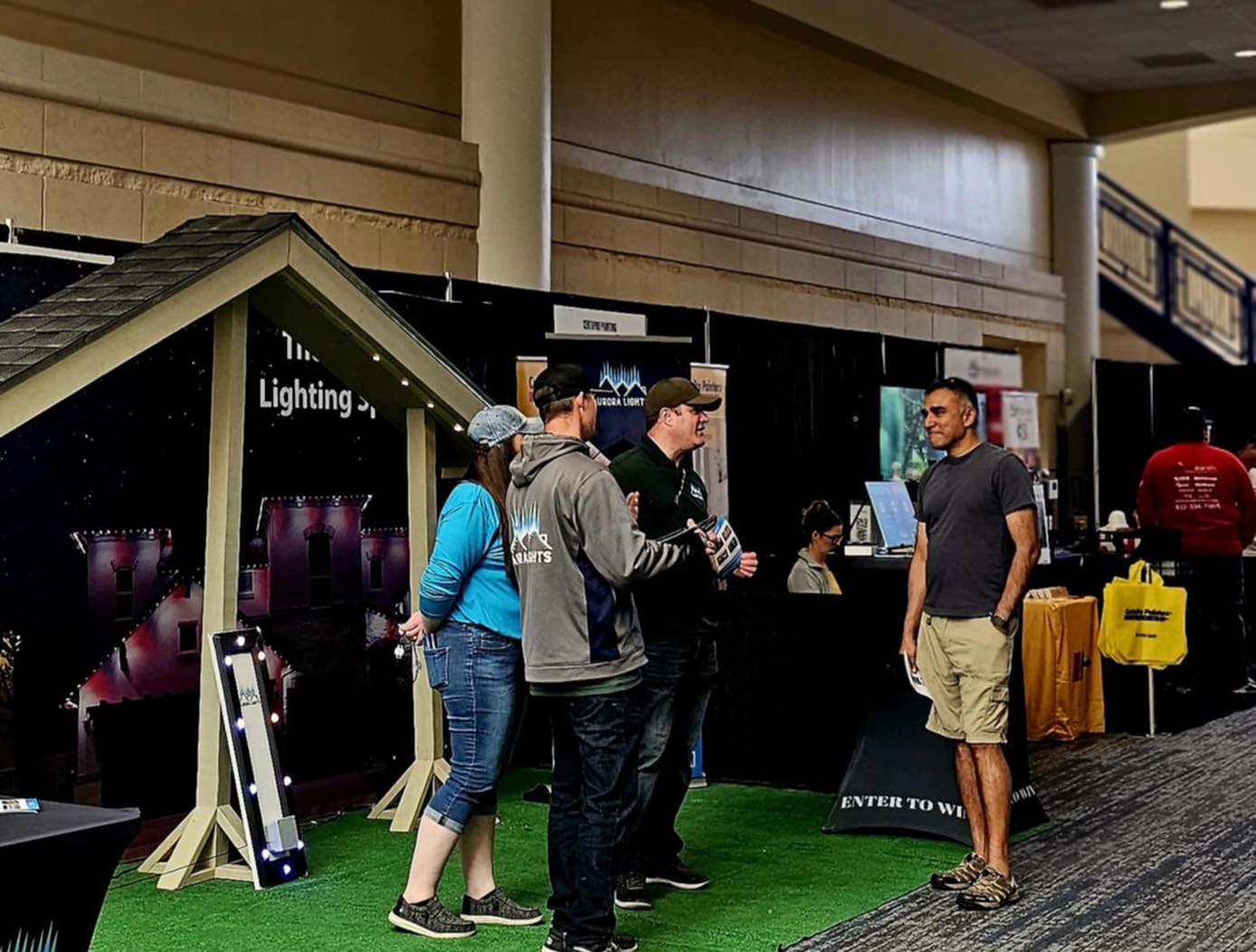
Speak to the experts in person at our upcoming Home and Outdoor Living Shows! TexwoodShows.com